One More Summit: The Fine Line Between Passion and Obsession at High Altitude
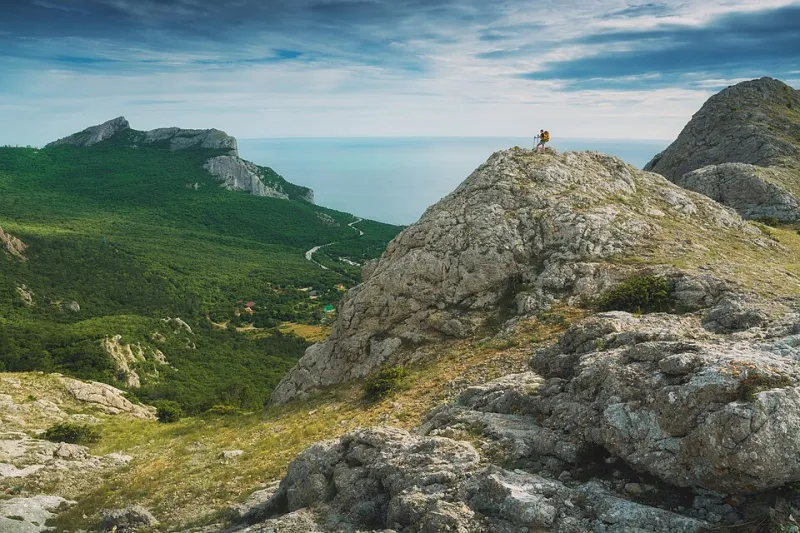
Photo: Vian, CC BY-SA 4.0, via Wikimedia Commons
Ask any seasoned hiker why they keep going back, and you'll usually get some version of the same answer: it just feels different up there. The air is thinner, the world is quieter, and for a few minutes on a windswept ridgeline, everything else disappears. It's a feeling that's genuinely hard to replicate anywhere else — and that's exactly the problem.
Because once you've stood on a summit and felt that particular cocktail of exhaustion and awe wash over you, the pull to do it again is almost immediate. Not next season. Not next month. Again. And again after that.
For millions of American hikers, this progression from casual trail-walker to committed peak-bagger is a completely natural evolution. But there's a quieter conversation happening in hiking communities across the country — one about what happens when the mountains stop being a source of joy and start functioning more like a compulsion.
Why Your Brain Loves a Summit
The neuroscience here isn't complicated, but it is worth understanding. When you push your body through a physically demanding ascent and reach a high point, your brain releases a significant burst of dopamine — the same reward chemical associated with achievement, novelty, and yes, addictive behavior. Layer on top of that the endorphin rush from prolonged aerobic exercise, and you've got a powerful internal reward system firing on all cylinders.
"The summit experience is almost tailor-made to create a feedback loop," says Dr. Renata Flores, a sports psychologist based in Colorado who works with endurance athletes and outdoor enthusiasts. "You set a hard goal, you suffer to reach it, and then you're rewarded with a view and a neurochemical high that feels earned. Your brain tags that whole experience as something worth repeating — urgently."
Peak-bagging culture amplifies this dynamic. Lists like Colorado's 14ers, the Northeast's 4,000-footers, or the Adirondack 46 give hikers a structured framework of goals that never fully runs out. Finish one list and there's always another. Finish that one and there's a winter variation, or a speed record, or a more technical route. The goalposts are infinitely moveable — which is thrilling until it isn't.
The Altitude Factor: When Physiology Gets Involved
Here's where things get medically interesting. At elevations above roughly 8,000 feet, the human body begins operating under real physiological stress. Oxygen levels drop, hearts work harder, and sleep quality deteriorates. Most healthy hikers adapt fine with proper acclimatization. But for those chasing increasingly higher objectives on compressed timelines, the risks stack up fast.
Acute Mountain Sickness (AMS) affects a significant portion of people who ascend quickly — headaches, nausea, fatigue, and disorientation that can escalate into High Altitude Pulmonary Edema (HAPE) or High Altitude Cerebral Edema (HACE), both of which are life-threatening emergencies. The terrifying part? Obsessive peak-baggers are statistically more vulnerable, not because they're less fit, but because they're more likely to push through early warning signs.
"I see it constantly," says wilderness medicine instructor Jake Ostrowski, who leads courses across the Mountain West. "Someone has driven twelve hours, taken time off work, trained for months. They're not turning around because of a headache. That's the mindset that gets people into serious trouble."
The elevation addiction, in other words, doesn't just affect your mental health — it can genuinely compromise your ability to make rational safety decisions in the field.
Personal Stories: When the Mountain Starts Calling Too Loud
Marisa Tran, a 34-year-old nurse from Denver, completed Colorado's 58 fourteeners in three years and describes the experience as one of the best and most destabilizing of her life.
"By the end, I wasn't hiking because it made me happy. I was hiking because not hiking made me anxious," she says. "I'd finish a summit and already be planning the next one before I was back at the trailhead. My weekends were completely consumed. My relationships suffered. I thought I was being disciplined and goal-oriented, but looking back, I was running from something."
She took a full year off high-altitude hiking and spent that time in therapy. "I don't regret the peaks. But I had to learn that the mountains were a way I was avoiding stillness, not seeking it."
Her story isn't unusual. Online hiking forums and Reddit communities dedicated to peak-bagging regularly surface threads from hikers questioning whether their drive has tipped into something unhealthy — often after a close call, an injury, or a relationship that finally broke under the weight of constant expedition planning.
How to Tell the Difference
Passion and compulsion can look nearly identical from the outside, and sometimes from the inside too. But there are some honest questions worth sitting with:
Are you hiking toward something or away from something? There's a meaningful difference between chasing a summit because it genuinely excites you and using the mountain as a way to escape anxiety, relationships, or responsibilities on the ground.
What happens when you can't go? Missing a planned hike due to weather or injury is disappointing for any dedicated hiker. But if a canceled trip sends you into a genuine emotional tailspin, that's worth paying attention to.
Are you managing risk honestly? If you've started rationalizing away warning signs — physical symptoms, weather windows, your own fatigue — because the objective matters more than your safety, the obsession has likely outgrown the passion.
Has your social world shrunk to the mountain? Hiking communities are wonderful, but if your entire identity and social life has collapsed into peak-bagging, it might be worth asking what else you've let go.
Finding a Healthier Relationship with Elevation
None of this is an argument against ambitious hiking. Chasing big objectives, pushing your limits, and standing on summits that once seemed impossible — that's some of the best stuff life has to offer. The goal isn't to hike less. It's to hike with awareness.
Dr. Flores recommends what she calls "intentional plateaus" — deliberately taking breaks between major objectives to let yourself enjoy the mountains without a checklist attached. "Some of the most meaningful hikes people describe to me are ones where they had no summit goal at all. They just walked. The compulsive peak-bagger often can't do that anymore, and that's a real loss."
Building in rest seasons, diversifying outdoor activities, and staying honest with the people who know you well are all practical ways to keep the summit obsession from running the show.
The mountains aren't going anywhere. That 14er will still be there next summer, and the summer after that. One of the most underrated skills in this sport isn't route-finding or gear selection — it's knowing when to go home, sit still, and let the mountains wait for you.
Because the best relationship with high places is one you can sustain for decades, not one that burns brilliant and fast and leaves you wondering where the joy went.