Your Body Is Lying to You Above 8,000 Feet — And the Science Proves It
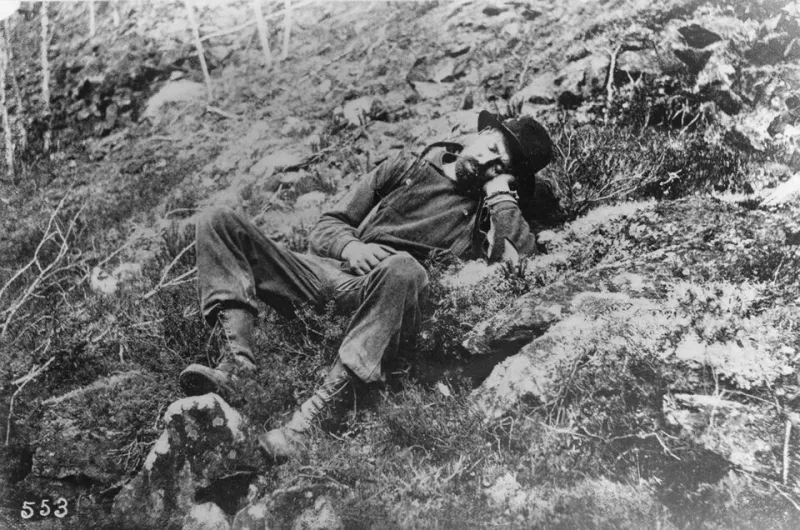
Photo: E.A. Hegg, CC BY-SA 4.0, via Wikimedia Commons
There's a particular kind of confidence that comes with being an experienced hiker. You've logged the miles. You've pushed through rain, blisters, and bonked knees on long descents. You know your body. You trust it.
Above 8,000 feet, that trust can get you into serious trouble.
The thing about altitude is that it doesn't announce itself like a pulled muscle or a blister forming on your heel. It works quietly, methodically, peeling away your physical and cognitive capacity in ways that feel — at least at first — a lot like just being a little tired. And that gap between how you feel and how impaired you actually are? That's where experienced hikers get into real trouble.
What Actually Happens When the Air Thins Out
Let's start with the basics, because they matter more than most people realize. At sea level, the air you breathe is about 21% oxygen. Climb to 8,000 feet and that percentage stays the same — but atmospheric pressure drops significantly, meaning each breath delivers fewer oxygen molecules to your lungs. By the time you're at 10,000 feet, your blood oxygen saturation can drop from a healthy 98–99% down to the low 90s or even high 80s, depending on how quickly you ascended and how your body responds.
That sounds like a minor dip in a number. In practice, it means your muscles are running on less fuel with every single step.
Your heart rate spikes to compensate. Your breathing becomes shallower and faster. Your mitochondria — the little cellular engines that power sustained effort — become measurably less efficient at converting oxygen into usable energy. Studies published in journals like High Altitude Medicine & Biology have documented reductions in VO2 max (your body's maximum oxygen uptake) of up to 1–2% per 100 meters above roughly 1,500 meters elevation. Do the math on a 14,000-foot Colorado summit and you're looking at a cardiovascular system operating at a fraction of its sea-level capacity.
The Muscle Problem Nobody Talks About
Oxygen delivery is the headline, but the muscle story is just as important — and far less discussed on the trail.
Skeletal muscle tissue at altitude doesn't just work harder; it recovers slower. Lactic acid clears from fatigued muscles less efficiently when circulation is strained and oxygen is limited. What this means practically: that burning sensation in your quads on a steep switchback doesn't fade the way it would at lower elevation. You rest, you feel slightly better, you push on — and you're actually accumulating fatigue debt faster than your body can signal it.
A 2019 study tracking experienced mountaineers in the Colorado Rockies found that participants consistently overestimated their remaining physical capacity above 9,500 feet by an average of 30–40%. They felt like they had more left in the tank than they did. The researchers attributed this partly to altered perception of exertion — another gift of reduced oxygen to the brain.
When Your Brain Stops Being Your Friend
Here's where it gets genuinely unsettling.
The prefrontal cortex — the part of your brain responsible for risk assessment, planning, and rational decision-making — is exquisitely sensitive to oxygen deprivation. Even mild hypoxia (lower-than-normal blood oxygen) measurably degrades executive function. You become more impulsive, less accurate in self-assessment, and slower to recognize danger.
In practical terms: the altitude that's making you physically weaker is simultaneously making you worse at recognizing that you're physically weaker.
This is not a fringe finding. It's been replicated across multiple studies, including research done at altitude simulation labs where subjects showed measurable cognitive decline at oxygen saturation levels they themselves rated as "fine" or "slightly off." One study had climbers complete simple math problems and reaction-time tests at various altitudes. Performance dropped well before participants reported feeling impaired.
Think about that the next time you're standing at 11,000 feet trying to decide whether the weather looks sketchy enough to turn around.
Real Hikers, Real Consequences
The statistics on altitude-related incidents in the American West are instructive. Rocky Mountain National Park, which sits almost entirely above 8,000 feet with its most popular summit — Longs Peak — topping out at 14,259 feet, sees hundreds of search and rescue operations annually. A disproportionate share involve experienced hikers who pushed past turnaround times, underestimated distance remaining, or misjudged deteriorating conditions.
In one well-documented case from 2021, a group of three fit, experienced hikers from the Denver area — people who regularly trained at moderate elevation — attempted a summit push on a 13er in the Sawatch Range without an acclimatization day. All three were in excellent cardiovascular shape. Two made the summit; one turned back with a splitting headache and nausea. The two who summited described feeling "off" on the descent, struggled with route-finding on terrain they'd reviewed carefully, and one took a minor fall on a section he later described as "not technically difficult at all."
None of them attributed their impairment to altitude in the moment. In retrospect, it was obvious.
The Acclimatization Myth You Need to Unlearn
Most hikers have heard the standard advice: ascend slowly, spend a night at elevation before going higher, drink water, avoid alcohol. All good advice. But there's a widespread misconception that following these guidelines means you're acclimatized. You're not — not fully, and not quickly.
True physiological acclimatization — where your body increases red blood cell production, optimizes hemoglobin's oxygen-binding capacity, and rebuilds mitochondrial efficiency — takes weeks, not days. What you get from a single acclimatization night in Estes Park or Leadville is a partial adaptation that blunts the worst symptoms of acute mountain sickness. It does not restore your sea-level strength.
Even people who live at altitude year-round experience measurable performance drops when moving to significantly higher elevations. The body's ceiling is real, and it's lower than most hikers want to admit.
Practical Recalibration for High-Altitude Hikes
None of this means you should avoid high-altitude trails — some of the most spectacular hiking in the country sits well above 8,000 feet. The point is to go in with accurate expectations, not inflated ones.
A few things worth building into your planning:
Cut your expected pace by more than you think necessary. Most experienced hikers underestimate the pace reduction altitude demands. Budget for a 25–40% slower pace than your flatland or low-elevation average, especially above 10,000 feet.
Set hard turnaround times and honor them. The cognitive impairment piece is real. Decide your turnaround time at the trailhead, write it on your hand if you have to, and treat it as non-negotiable regardless of how close the summit feels.
Monitor effort, not just speed. At altitude, perceived exertion is an unreliable metric. Use heart rate if you have a monitor, and aim to keep it in a sustainable range rather than chasing a pace.
Hydrate aggressively. Altitude increases respiratory water loss significantly. Dehydration compounds every physiological impairment altitude already causes.
Trust the headache. A headache above 8,000 feet is your body's clearest signal that something is off. Don't push through it expecting it to resolve.
The Mountain Doesn't Grade on a Curve
There's a humbling truth at the heart of high-altitude hiking: your fitness level at sea level is only partially transferable. The trail doesn't care how many miles you logged at elevation last summer or how strong your legs felt on that ridge in the Cascades. Above 8,000 feet, everyone is working with a diminished system — the difference between experienced and inexperienced hikers is mostly in how well they recognize and manage that reality.
The strongest thing you can do up high isn't push harder. It's know exactly how much weaker you are — and plan accordingly.